
Early warning signs
Sometimes the opener strains and stalls a few inches short of closed. None of these feel urgent on day one. By week three, the spring that was groaning is the spring that snaps, usually on a cold morning when you're already late.
Antioch, CA
Garage door maintenance for Antioch homes built 1950-2008, where original hardware and moderate heat wear springs and rollers faster than owners expect.
Symptoms
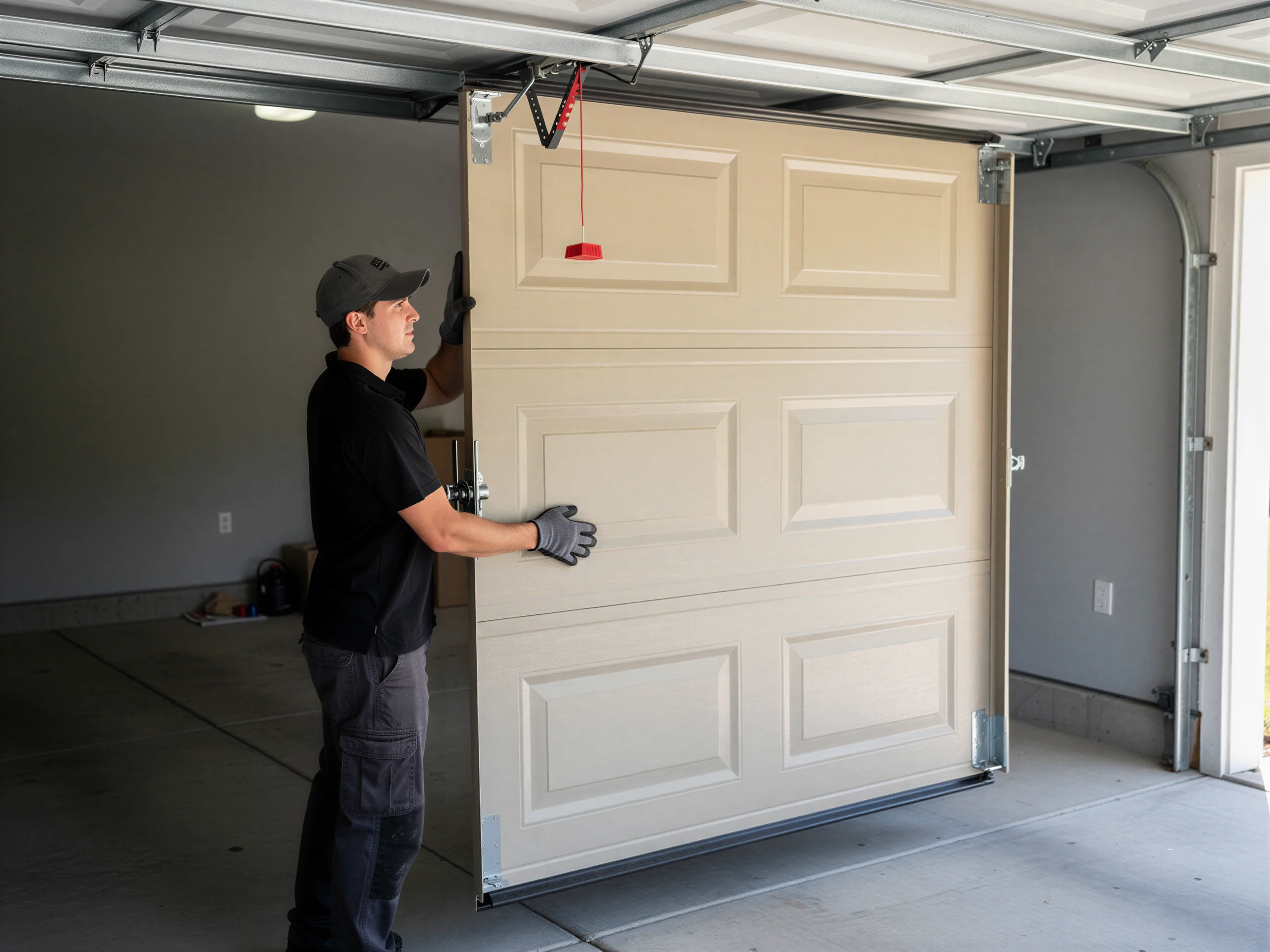
The door still opens, but it's not smooth anymore. You hear a grind on the way up, a shudder partway through the cycle, or a thump as the panel hits the floor instead of settling into it.
Sometimes the opener strains and stalls a few inches short of closed. None of these feel urgent on day one. By week three, the spring that was groaning is the spring that snaps, usually on a cold morning when you're already late.
What you're hearing is wear that's been building for years, not a sudden failure. Rollers glaze over and stop turning freely. Track bolts work loose from thousands of cycles. Lubricant that was applied once, a decade ago, has long since dried to a crust that does nothing.
In homes across this service area - built mostly between 1950 and 2008, with the bulk of the stock from the 1960s and 70s - the original hardware is often still in the opening, just tired. A door that's never been serviced doesn't fail quietly. It fails at the worst possible moment, with a car half-in and half-out of the garage.
The repair
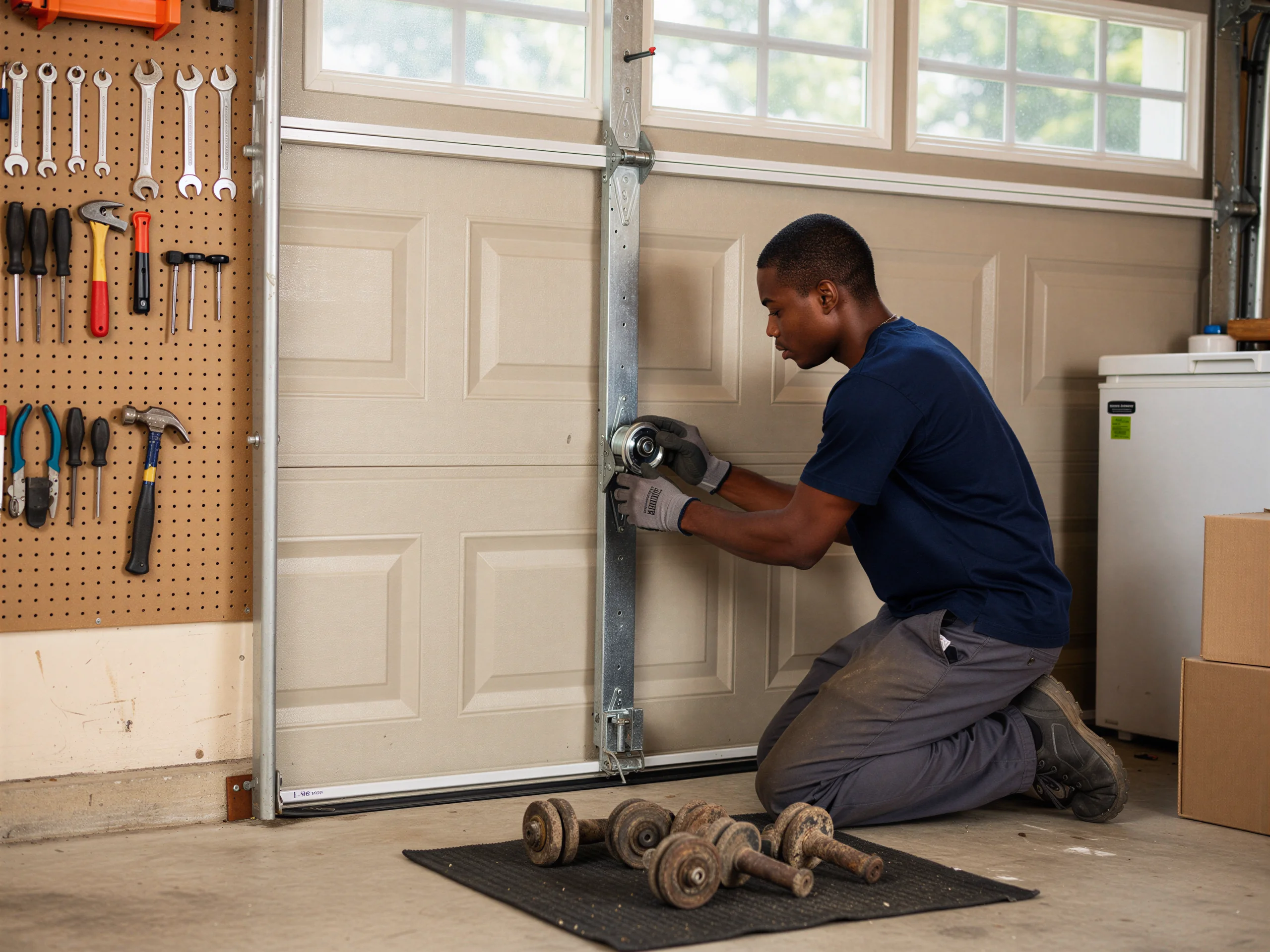
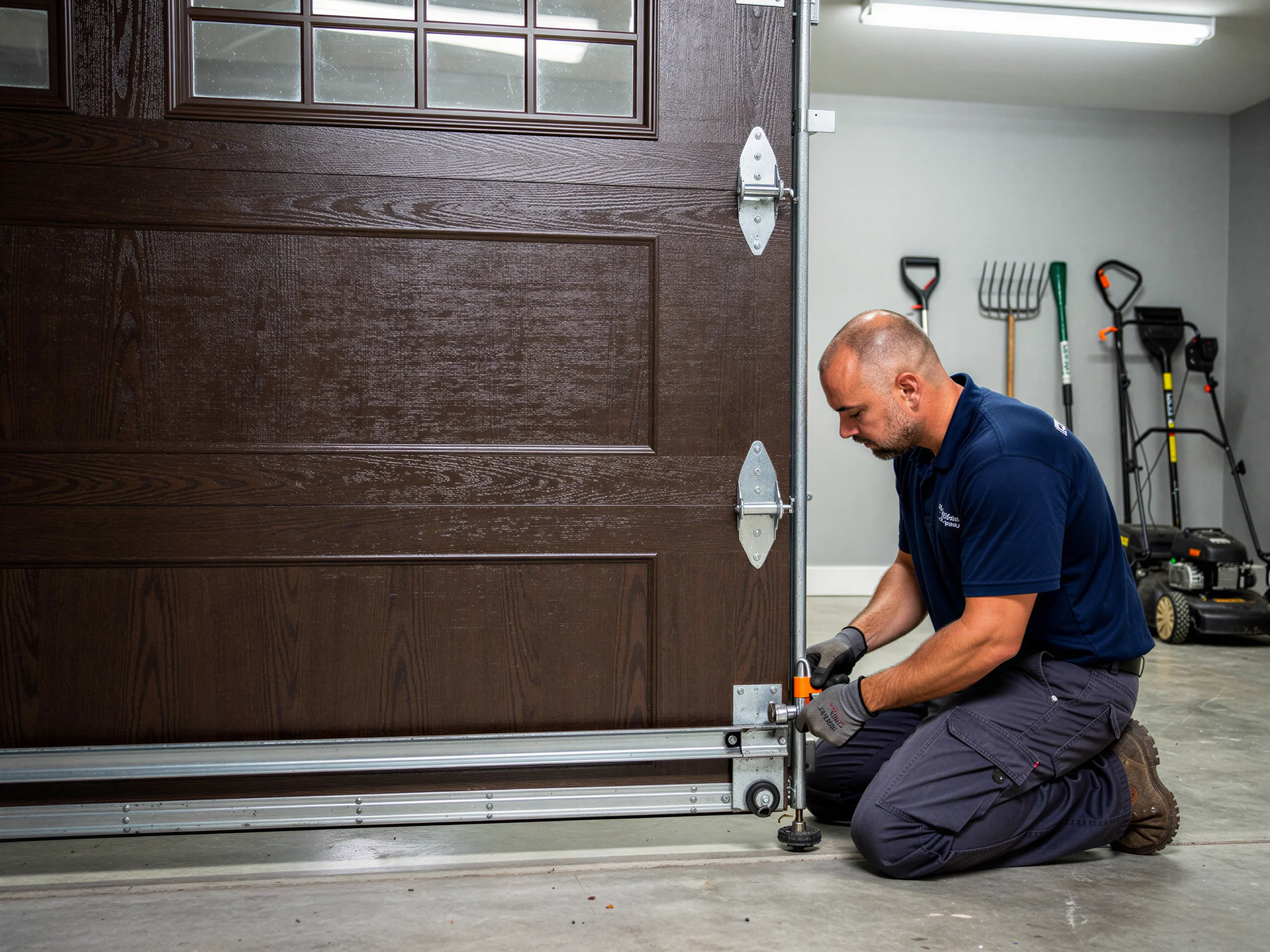
A maintenance visit isn't a repair dressed up with a different name - it's the work that keeps a repair from being necessary. We check spring tension and cable wear, inspect rollers and track alignment, tighten the hardware that's walked loose from years of cycling, and lubricate the points that actually need it (not everything - over-lubing attracts grit and makes things worse).
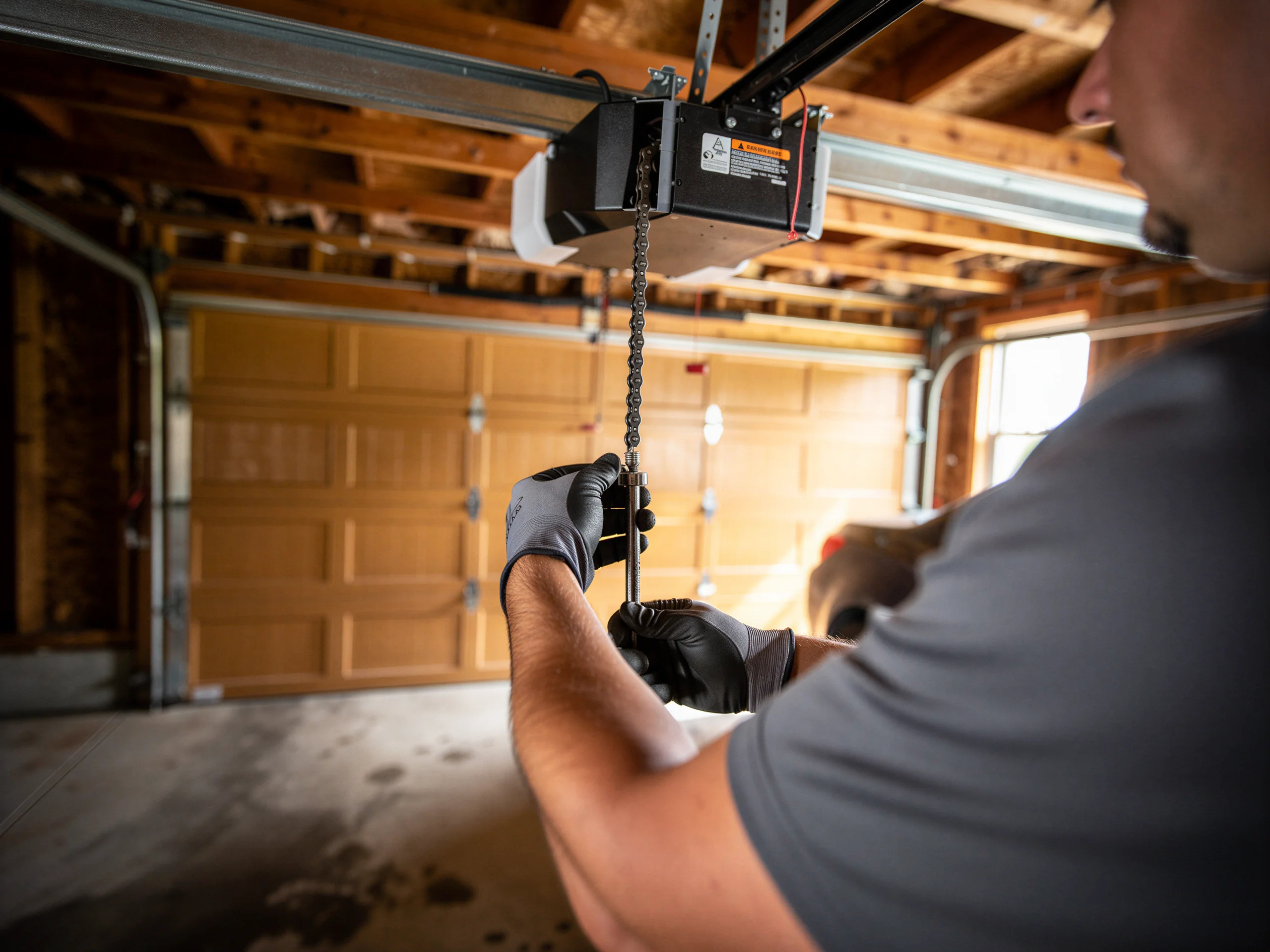
We test the opener's force settings and safety reversal, since a door that doesn't stop on contact is a door that's one cycle from an injury claim, not just a squeak.
On a lot of the housing stock here - the 1960s and 70s builds that make up most of this service area - that means working with torsion hardware that's older than the owner realizes, sized for a lighter door than what's hanging on it now if a panel was ever swapped.
We don't force parts that don't belong together. If a spring is undersized for the door it's holding, replacing it properly takes longer than a quick tighten-and-go, and we'll tell you that before we start, not after.
Pricing
We don't have a published price to post here, and giving you a made-up number would be worse than giving you none. What we can tell you is what drives the cost: how many moving parts need attention, whether the opener needs recalibrating as part of the visit, and whether we find something during the check - a cracked roller, a frayed cable - that's worth fixing on the spot before it becomes an after-hours call.
The households in this service area skew toward higher incomes (the median here runs well above $130,000), which sometimes means doors upgraded with heavier insulated panels on hardware that was never resized to match. That mismatch is one of the more common cost drivers we see, and it's worth asking about directly when you book, rather than finding out mid-visit.
Local causes
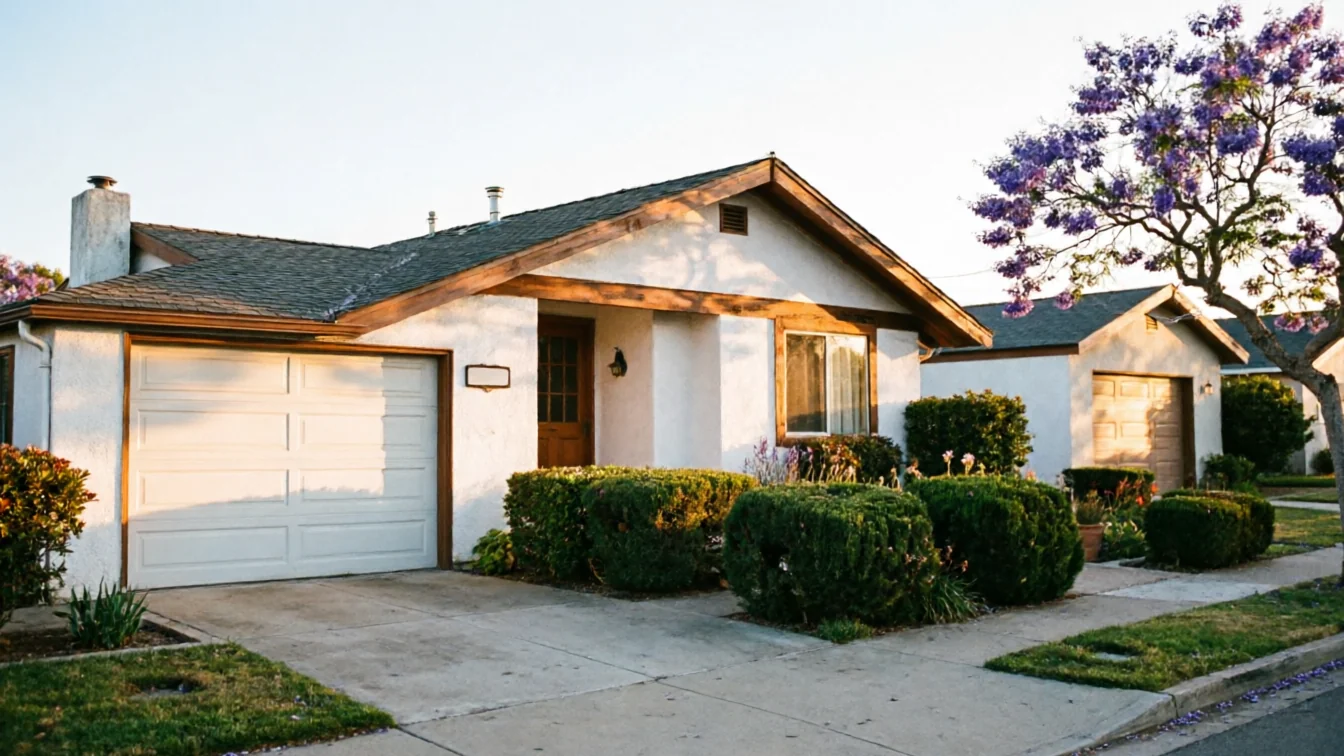
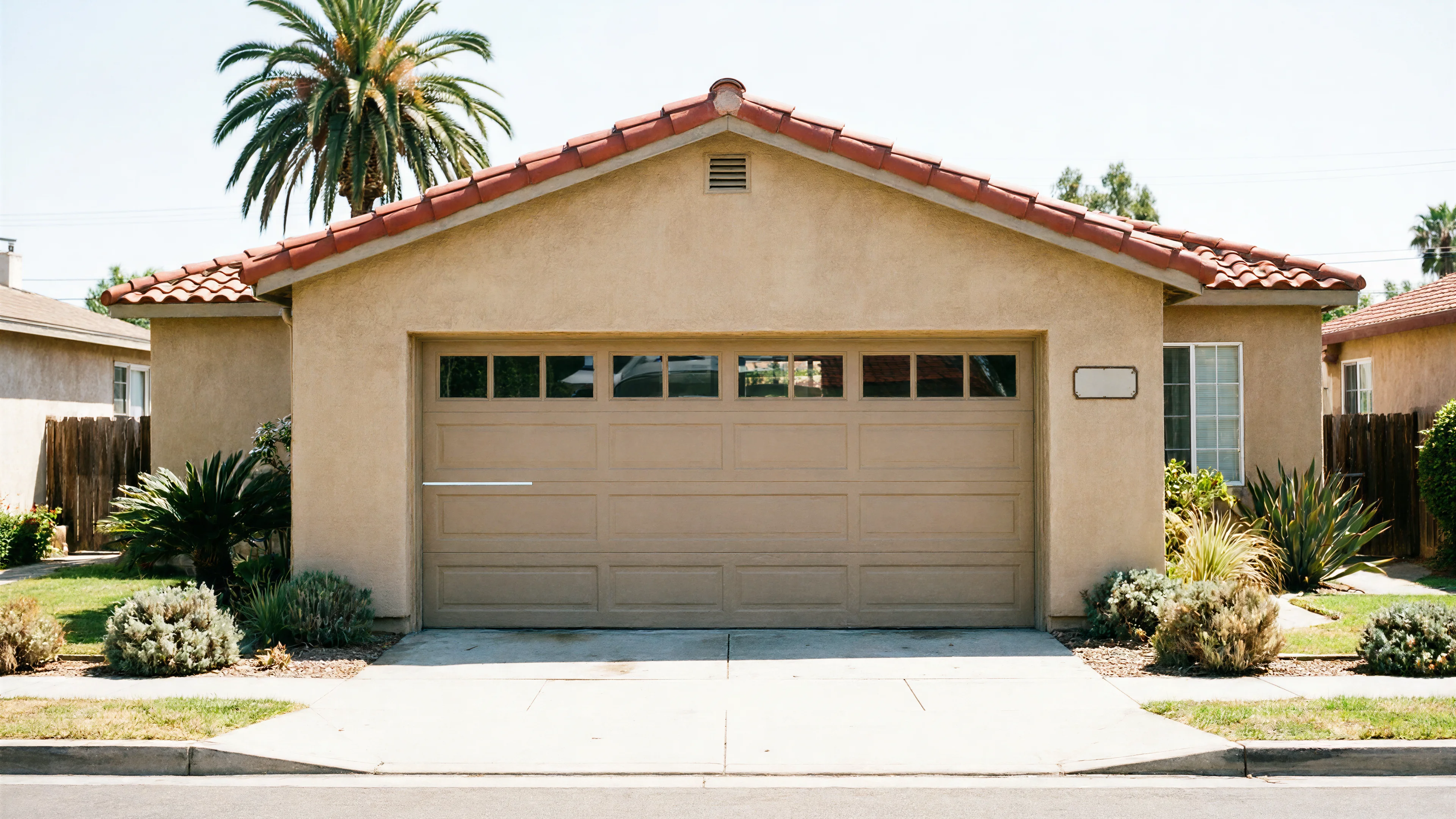
Two things work against garage door hardware in this part of the East Bay. First, the age of the housing stock: with most homes dating to the 1960s and 70s and construction across the service area running from 1950 to as recent as 2008, a large share of doors are still on their original torsion springs, original rollers, or both. That hardware has a service life, and nobody resets the clock on it just because the door still looks fine from the driveway.
Second, the climate band here runs moderate heat, which sounds easy on equipment compared to extreme heat regions - and it mostly is - but the swing between a cool morning and a hot afternoon still expands and contracts metal track and panel seams day after day, season after season. It's slower damage than you'd see somewhere with real extremes, which is exactly why owners don't catch it: there's no single bad week that breaks things. There's just years of small movement nobody checked on.
Questions
Once a year is a reasonable baseline for most doors in this area, especially on homes with original hardware from the 1960s-70s building wave. If your opener strains, the door shudders mid-cycle, or you hear new grinding, don't wait for the annual visit - that's the hardware telling you something's already loose or worn.
Usually, yes, up to a point. A lot of the doors we see on 1950s-2008 housing stock have original torsion springs and rollers that just need adjustment, not replacement. But if the door itself is warped or the opener is failing alongside the hardware, maintenance won't fix that - at some point replacement is the honest answer, not another tune-up.
Yes, we cover the wider service area including towns within roughly 5 to 20 miles. Local specifics for each town live on that town's own page - this page covers what maintenance involves across the whole area we work in.
Explore more
Ready when you are
Antioch Garage Door Pros repairs and installs garage doors, springs and openers in Antioch, CA and the surrounding area.